

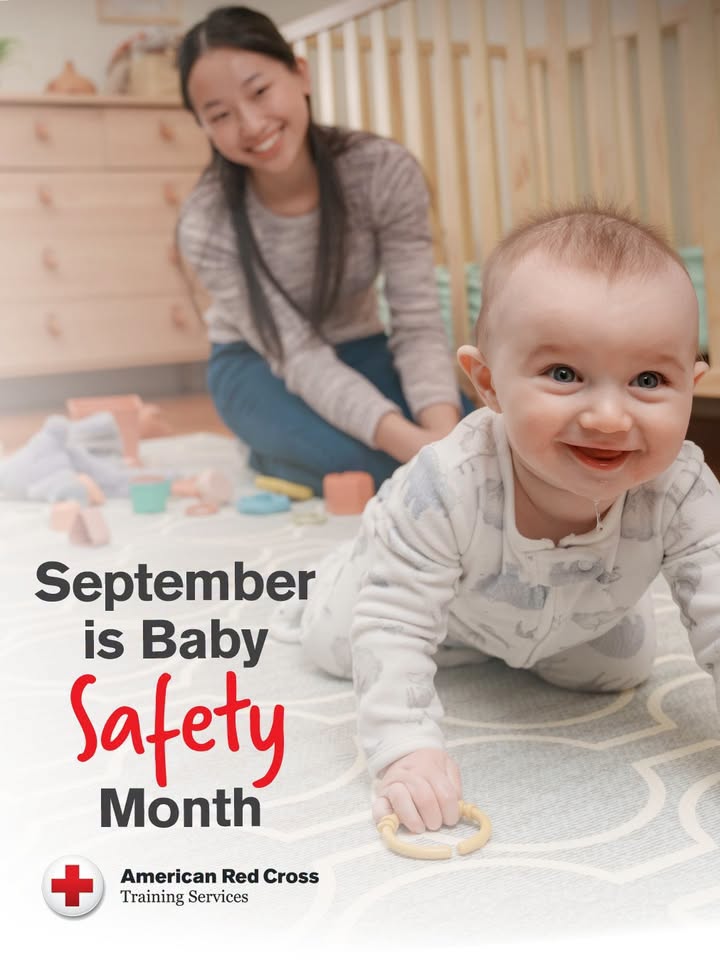
ew things are as precious as a baby. From their first smile to their first steps, every milestone reminds parents and caregivers how important it is to keep little ones safe, healthy, and protected. During Baby Safety Month, the American Red Cross encourages families to take steps that can help them confidently respond to emergencies and everyday accidents alike.
While no one wants to imagine a child experiencing a medical emergency, being prepared can make all the difference. Whether it’s a minor cut, a choking incident, or a more serious situation requiring CPR, having the right knowledge and skills can help caregivers act quickly and confidently when every second counts.
Why First Aid Matters
Babies are naturally curious as they grow and explore the world around them. Along with that curiosity can come bumps, scrapes, and unexpected emergencies. Knowing basic first aid can help parents and caregivers recognize when something is wrong and take appropriate action.
If a baby becomes unresponsive:
- Check for responsiveness by gently tapping the bottom of the baby’s foot and calling out to them while looking for signs of breathing, severe bleeding, or another life-threatening condition. Check for no more than 10 seconds.
- If the baby is unresponsive, not breathing, only gasping, or has a life-threatening injury, call 9-1-1 immediately and begin care based on your training.
- If the baby responds, is fully awake, and does not appear to have a life-threatening condition, continue to monitor them and assess the situation based on what you observe and any information provided by a parent or guardian.
CPR Can Save a Life
In an emergency, knowing CPR can be the critical link between a medical crisis and professional care.
If a baby is unresponsive and not breathing or is only gasping, begin CPR immediately, starting with chest compressions. Continue cycles of 30 compressions and 2 rescue breaths until:
- You notice a clear sign of life.
- An AED becomes available and ready to use.
- Another trained responder can take over.
- Emergency medical personnel arrive.
- You are physically unable to continue.
- The scene becomes unsafe.
- You have completed approximately two minutes of CPR while alone with a baby and need to call 9-1-1.
Learning Lifesaving Skills with the American Red Cross
At the American Red Cross, preparedness is at the heart of our mission to prevent and alleviate human suffering. Every year, Red Cross training programs equip parents, grandparents, babysitters, teachers, and caregivers with the skills they need to recognize emergencies and respond effectively.
By learning infant CPR, first aid, and other lifesaving techniques, caregivers gain the confidence to act when it matters most. These skills not only help protect children but also help build safer, more resilient communities.
This Baby Safety Month, consider investing a few hours in training that could one day save a life. The American Red Cross offers CPR and First Aid certification courses throughout the Houston area and across the country.
Learn more or find a class near you: https://www.redcross.org/take-a-class/cpr. You can also learn Baby Safety and First Aid tips from the Red Cross here.
When it comes to protecting the smallest members of our families, preparation is one of the greatest gifts we can give. Through education, training, and a commitment to safety, the American Red Cross is proud to help caregivers be ready for whatever comes next.
Story by Helen Meza


