
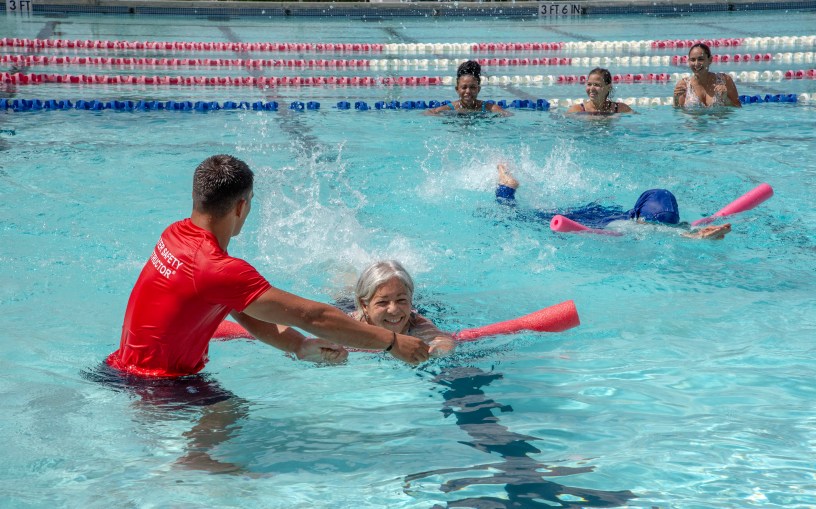
Swimming is more than just a recreational activity, it’s a life skill that can help keep you and your loved ones safe. But true water safety goes beyond knowing the basics of swimming. It’s about becoming water competent: having the knowledge, skills, and confidence to safely enjoy water while preventing and responding to emergencies.
The American Red Cross Learn-to-Swim program, taught by Water Safety Instructor® (WSI™) certified professionals, helps people of all ages build these essential skills. Water competency includes not only learning how to swim but also becoming water smart—understanding how to recognize risks, make safe choices, and respond effectively in and around water.
Whether you’re just beginning your swimming journey or working to improve your skills and endurance, following these important water safety practices can help keep everyone safer.
Essential Swimming Safety Tips
Stay Alert Around Water
- Provide close, constant, and undistracted supervision whenever children are in or near water.
- Even when lifeguards are present, parents and caregivers remain the first line of defense.
- Put away distractions such as cell phones and focus your full attention on the children in your care.
- Never leave a young child unattended near water, even for a moment.
Swim Smart
- Always swim in designated areas supervised by lifeguards when available.
- Follow the buddy system, never swim alone.
- Stay within arm’s reach of weak or inexperienced swimmers.
- Teach children to always ask permission before going near water.
Designate a Water Watcher
When swimming with family or a group, assign a dedicated “water watcher” an adult whose sole responsibility is supervising swimmers. Rotate the role regularly to ensure everyone remains attentive and engaged.
Use Layers of Protection
No single safety measure is enough on its own. Combine multiple layers of protection to reduce risk:
- Have young children and inexperienced swimmers wear U.S. Coast Guard-approved life jackets.
- Remember that life jackets are a safety aid, not a substitute for supervision.
- Avoid relying on water wings, inflatable toys, swim rings, or other flotation devices as safety equipment.
- If you have a pool, install and maintain appropriate barriers to prevent unsupervised access.
Understand Pool Safety Risks
Many drowning incidents involving children occur during non-swim times, when adults do not expect children to be in the water. In many cases:
- The child was out of sight for less than five minutes.
- One or both parents were nearby at the time.
- The incident occurred as a swimming activity was ending and everyone believed the water was clear.
These tragic situations highlight why constant vigilance is so important.
Be Prepared for Emergencies
- Make sure everyone in the family learns how to swim and understands basic water safety.
- If a child is missing, check the water first, seconds matter.
- Know how and when to call 9-1-1 or your local emergency number.
- Keep rescue and emergency supplies nearby, including:
- Reaching or throwing equipment
- Life jackets
- A charged cell phone
- A well-stocked first aid kit
Build Skills Through Training
One of the best ways to increase safety is through education and practice. Consider enrolling in:
- Age-appropriate Red Cross water orientation and learn-to-swim classes
- Home pool safety courses
- Water safety education programs
- First Aid, CPR, and AED certification courses
These programs provide valuable skills that can help prevent emergencies and empower you to respond confidently if one occurs.
Make Water Safety a Family Priority
Becoming water competent is an ongoing journey that combines swimming ability, water safety knowledge, and emergency preparedness. By learning proper skills, staying vigilant, and following proven safety practices, families can enjoy the water with greater confidence and peace of mind. After all, the goal isn’t just to swim, it’s to be safe, smart, and prepared every time you’re around water.


