
Extreme heat is dangerous ─ the leading cause of weather-related deaths in the United States. The American Red Cross recommends taking three steps in extreme heat ─ stay hydrated, stay cool and stay connected.
- Stay hydrated by drinking a cup of water every 20 minutes, even if you don’t feel thirsty. Avoid sugary, caffeinated and alcoholic drinks.
- Stay cool by spending time in air-conditioned places. If your home is too hot, go to a mall, library or cooling center.
- Stay connected by checking on others and asking for help if you need it.
KNOW THE SIGNS OF HEAT ILLNESS Extreme heat can make anyone sick and it’s critical to act fast. The Red Cross recommends learning the warning signs and knowing what to do so you can react quickly.
Some people are at higher risk of getting sick because their bodies have a harder time staying cool. This includes older adults, children, pregnant women, and people with chronic conditions or disabilities. Individuals who take certain medications are at higher risk for heat related injury and illness and should consult their medical provider for guidance on managing their medication during periods of extreme heat. Athletes, outdoor workers and people without air conditioning are also at higher risk for heat illness.
- Heat cramps are an early sign of trouble and signaled by heavy sweating and muscle pain. Stop what you’re doing, rest in a cool place and drink a cup of water — or a sports drink — every 20 minutes. If you feel sick to your stomach, pause drinking. Get medical help if cramps last more than two hours or you have heart problems.
- Heat exhaustion is more serious and signaled by heavy sweating, weakness, cool and clammy skin, muscle cramps, dizziness, fainting, nausea or vomiting. Stop what you’re doing, rest in a cool place and drink a cup of water — or a sports drink — every 20 minutes. Loosen your clothes and place a cool, wet cloth on your body. Get medical help if you’re vomiting, don’t feel better in an hour, or if you have heart or kidney problems.
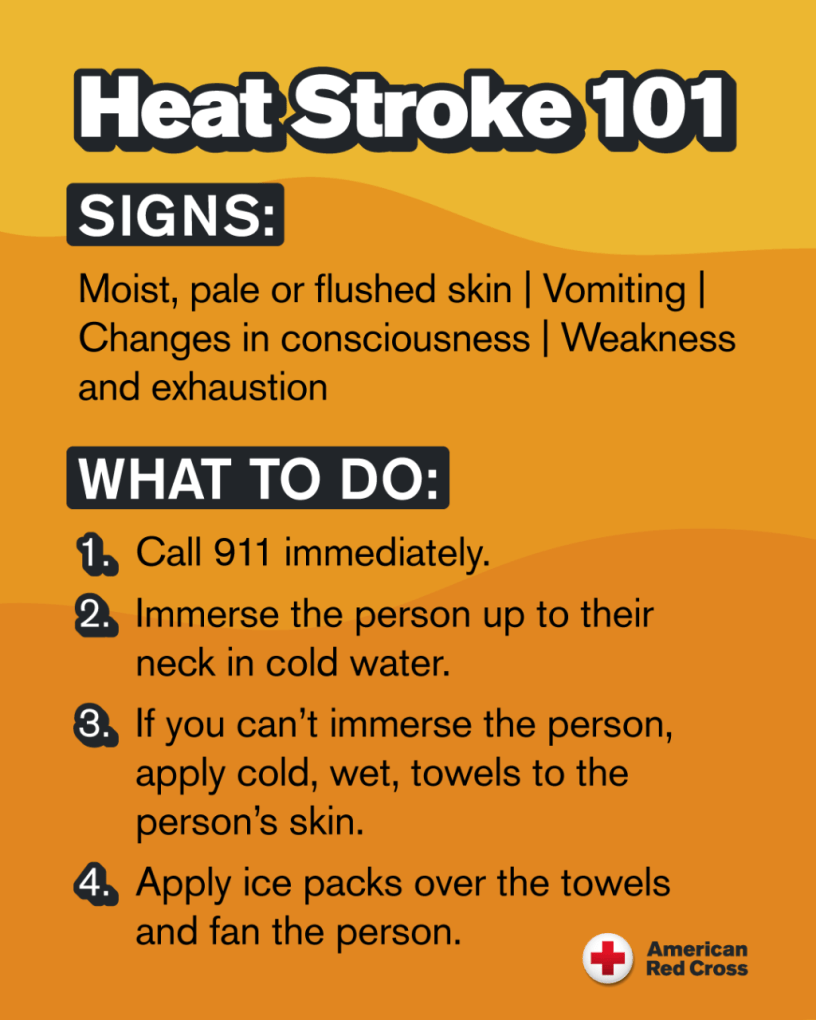
- Heat stroke is a deadly condition signaled by high body temperature, rapid heartbeat, confusion, headache, dizziness, fainting, nausea or vomiting. Take action by calling 911. Move to a cool place, remove extra clothing and use a wet cloth or a cool bath to cool down. If possible, sip a sports drink or water.
Here are more steps to help keep you safe as temperatures rise:
- Think about how you’ll stay cool. If you have air conditioning, make sure it’s working properly. Consider where you can go to cool off if the power goes out.
- If you don’t have air conditioning and your home becomes too hot, think about where you’ll go, how you’ll get there and what you’ll take with you.
- If you are older, pregnant, take medication or have a chronic condition or disability, your body may have a harder time cooling down during extreme heat. Talk to your doctor about how you can stay healthy.
- Make sure you have supplies to keep medication cool and equipment charged, especially during a power outage.
- If you’re an athlete, think about how you can alter your exercise schedule to avoid the hottest times of the day or work out indoors.
- If you work outdoors, find out if you can alter your schedule to avoid the hottest times of the day. Consider how you’ll stay hydrated and find a cool place to take breaks.
- Sign up for free emergency alerts from your local government to stay updated about heat waves and the location of open cooling centers.
- Make sure pets have access to fresh water and shade.
About the American Red Cross:
The American Red Cross shelters, feeds and provides comfort to victims of disasters; supplies about 40% of the nation’s blood; teaches skills that save lives; distributes international humanitarian aid; and supports veterans, military members and their families. The Red Cross is a nonprofit organization that depends on volunteers and the generosity of the American public to deliver its mission. For more information, please visit redcross.org or CruzRojaAmericana.org, or follow us on social media.


