
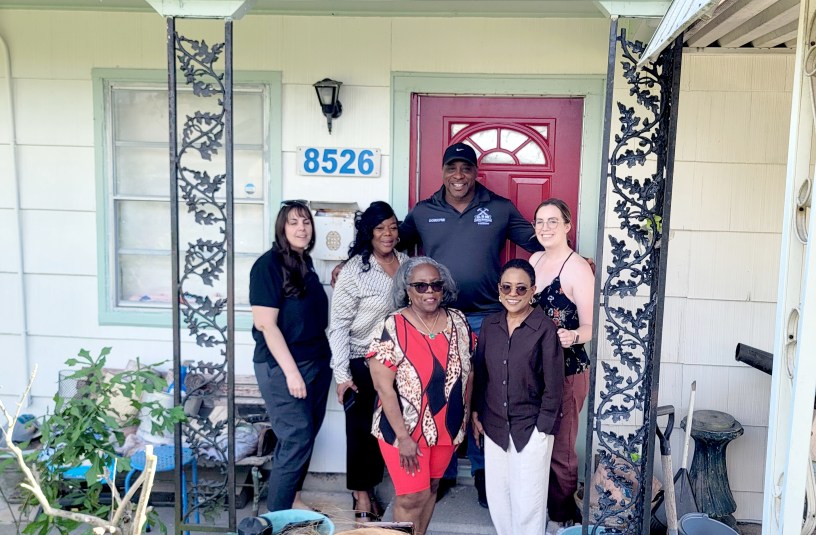
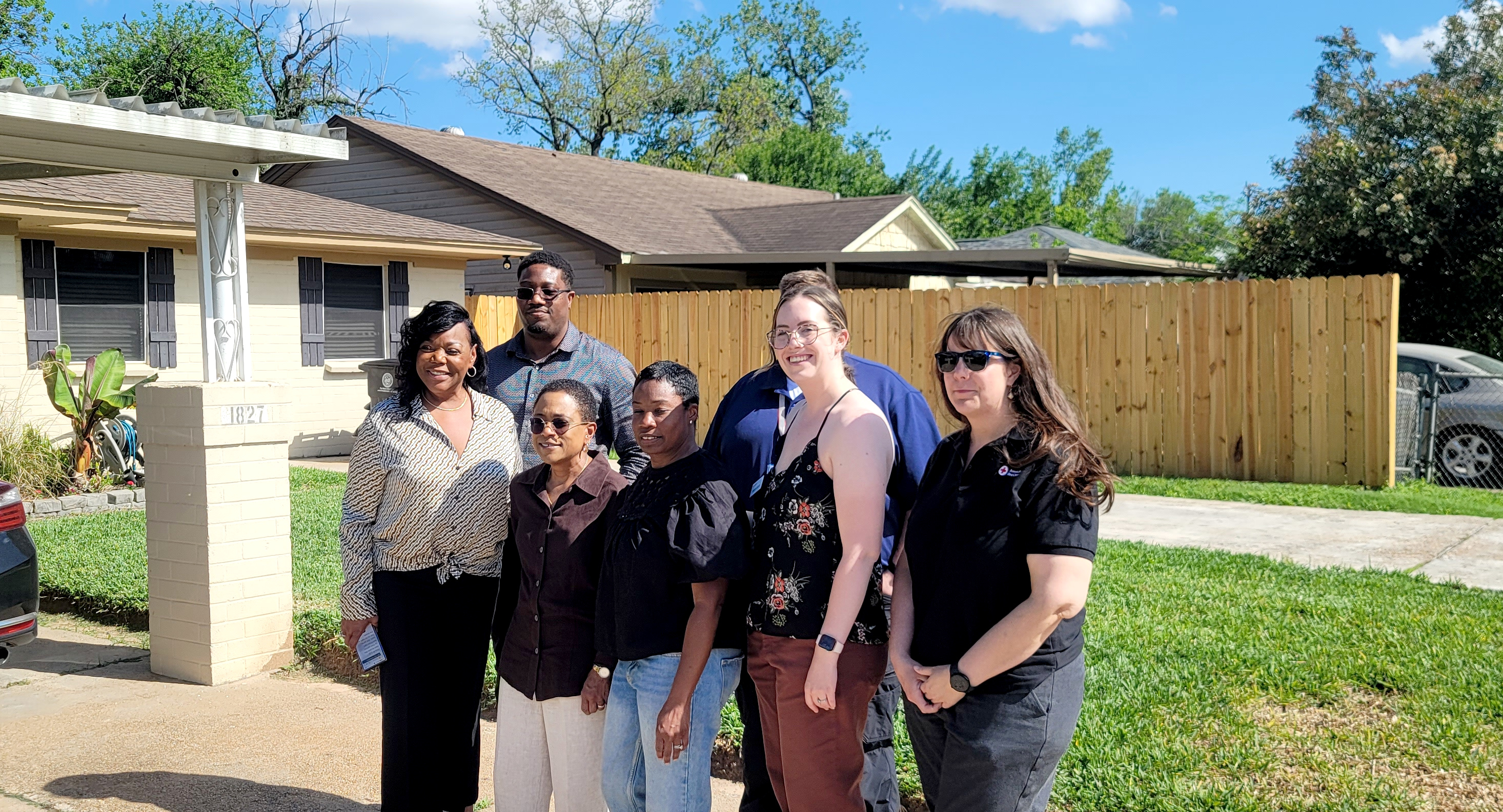
On April 8, representatives of the American Red Cross met with leadership from the Fifth Ward Community Redevelopment Corporation (FWCRC) to reflect on the tangible results of their partnership, one formed to reach Houston residents who were left behind in the long recovery from Hurricane Beryl.
When Beryl struck the Bayou City on July 8, 2024, it brought wind gusts of 60–70 mph and more than 13 inches of rain. Widespread power outages followed, and damages across the region were estimated at $1.5 billion. While much of the city began the arduous process of recovery, many Fifth Ward residents found themselves stuck, unable to move forward and uncertain where to turn.
Where Recovery Stalls
Houston’s Fifth Ward is one of the city’s most economically disadvantaged communities, and disasters tend to deepen challenges that already exist. Older homes, deferred maintenance, and systemic barriers to accessing resources meant critical repairs stalled or never began.
Insurance, when it existed, was often insufficient. Many families were hesitant to file claims at all, fearing they would be dropped. Others carried policies with deductibles so high they effectively eliminated coverage. As Rev. Jerome Clemons, CEO Emeritus of FWCRC, put it plainly: “When you raise your deductible, you don’t have insurance.” FWCRC found that homeowners who had owned their homes for five years or less were especially unlikely to file claims, and even when claims were approved, coverage frequently fell short of full replacements, particularly for roofs.
For seniors and residents with disabilities, the challenges were even greater. When repairs required physical labor they couldn’t perform themselves, the damage often became permanent. Some residents who did hire contractors encountered substandard workmanship or long delays that worsened the damage. In one case, an improperly installed roof led to additional water penetration and further loss.
Trust Built Locally
Founded in 1989, the Fifth Ward Community Redevelopment Corporation is a HUD-certified housing agency serving households earning up to 120% of the area median income. FWCRC has earned the community’s trust by being visible, present, and accountable.
“Residents come to us because we’re here,” said Kathy Flanagan-Payton, FWCRC’s President and CEO. “There’s a long history of people in this community being taken advantage of. That makes residents understandably wary of seeking help outside the neighborhood.”
Following Hurricane Beryl, FWCRC worked quickly to identify residents still in need. Staff distributed flyers door-to-door and conducted mass outreach through social media. Applicants were carefully vetted using identification, proof of income, and attestation of hurricane impact to ensure assistance reached those who truly needed it. As Rev. Clemons explained, “We want to separate the need from the greed.”
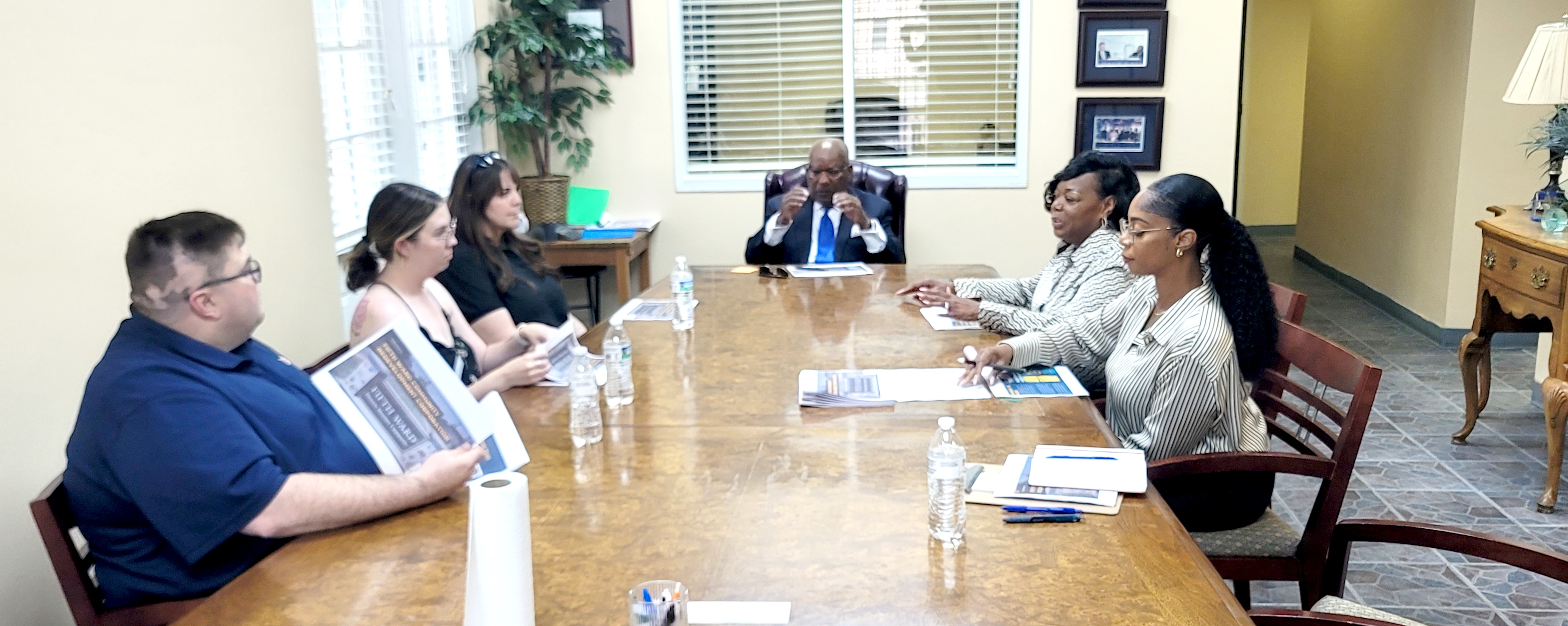
The American Red Cross Steps In
Despite FWCRC’s deep roots and past collaborations with partners like Houston Habitat for Humanity and the Tejano Center for Community Concerns, available resources still fell short. Many partnerships are short-term— “one and done,” as Flanagan-Payton described them and the last remaining families were left without solutions.
That is where the American Red Cross made a decisive difference. Through a targeted grant, the Red Cross enabled FWCRC to reach residents who had exhausted every other option.
Sarah Gloria, Senior Grants Manager for the American Red Cross, emphasized the importance of this collaboration: “We’re grateful for the partnership and excited for our funding to get to places it wouldn’t normally reach.” By trusting FWCRC to put resources directly at the point of use, the Red Cross ensured help was delivered efficiently, equitably, and with dignity.
FWCRC leaders repeatedly emphasized their gratitude for the Red Cross’s commitment to a longer-term partnership, one that recognized both the depth of need and the value of local expertise.
Stories of Recovery Made Possible
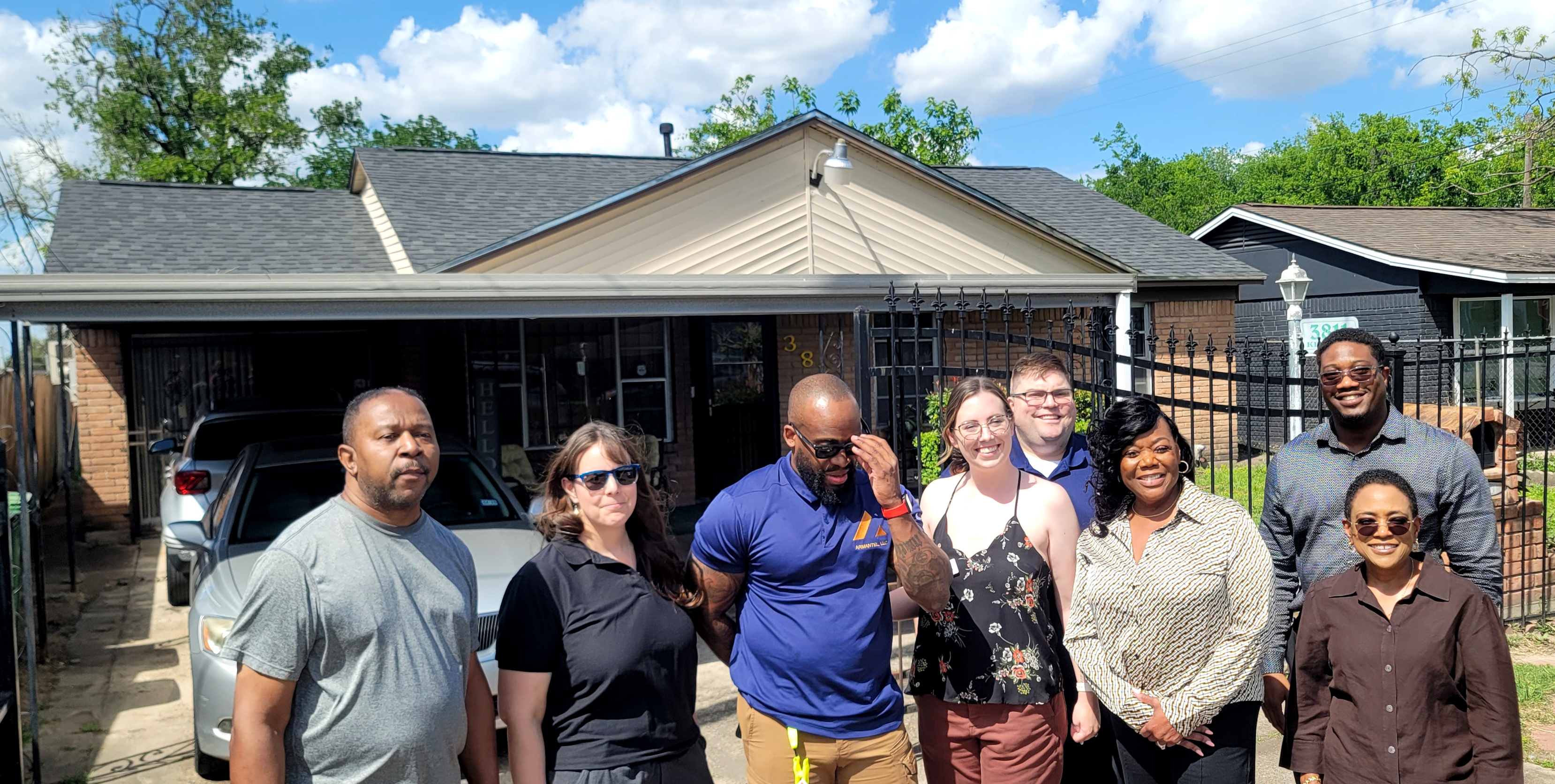
The impact of this partnership is best seen in the lives of the residents it served.
Mr. John
Mr. John grew up in his home, originally owned by his mother, a place filled with decades of memories. Hurricane Beryl tore shingles from the roof and caused water damage to the decking beneath. A knee injury made it impossible for him to complete the repairs himself. Through the Red Cross-funded partnership, a contractor was able to repair the roof in a single day. Mr. John expressed deep gratitude to both the American Red Cross and FWCRC for helping him remain in the home where his life began.
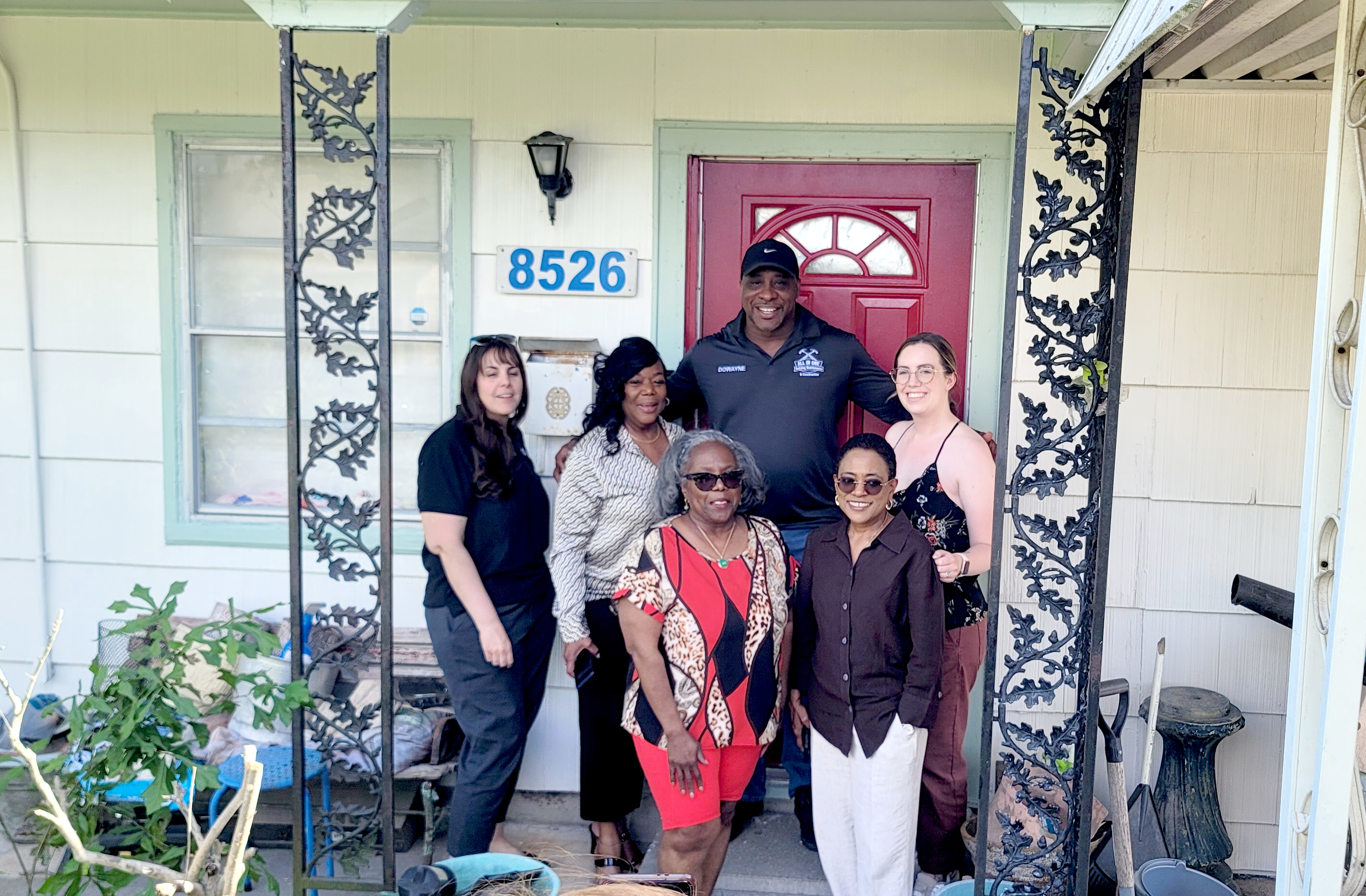
Ms. Brenda
Built in the 1940s and purchased by her mother in the 1950s, Ms. Brenda’s home is a generational anchor. Beryl damaged the roof, front door, siding, and caused a bedroom ceiling to collapse. When she renewed her insurance, her deductible increased dramatically, making repairs financially out of reach. With support from the Red Cross grant, FWCRC was able to deploy a trusted contractor who completed the necessary repairs in a timely manner, restoring safety and stability to her home.
Ms. Patricia
High winds from Beryl damaged Ms. Patricia’s fence. After a prolonged fight with her insurance company and a denial from FEMA, who deemed the fence “non-essential” the structure eventually collapsed entirely. FWCRC stepped in with Red Cross funding to rebuild the fence, restoring both security and peace of mind.
A Model for Meaningful Recovery
Together, the American Red Cross and the Fifth Ward Community Redevelopment Corporation demonstrated what effective disaster recovery looks like when national resources align with local trust. This partnership did more than fund repairs, removed barriers, restored homes, and reaffirmed that Fifth Ward residents are not forgotten.
FWCRC extends its sincere gratitude to the American Red Cross for its investment, its flexibility, and its belief that recovery must reach those who are hardest to reach. Because of that commitment, families are safer, homes are restored, and a community is moving forward stronger than before.
Story By: Bryan Hanks


