
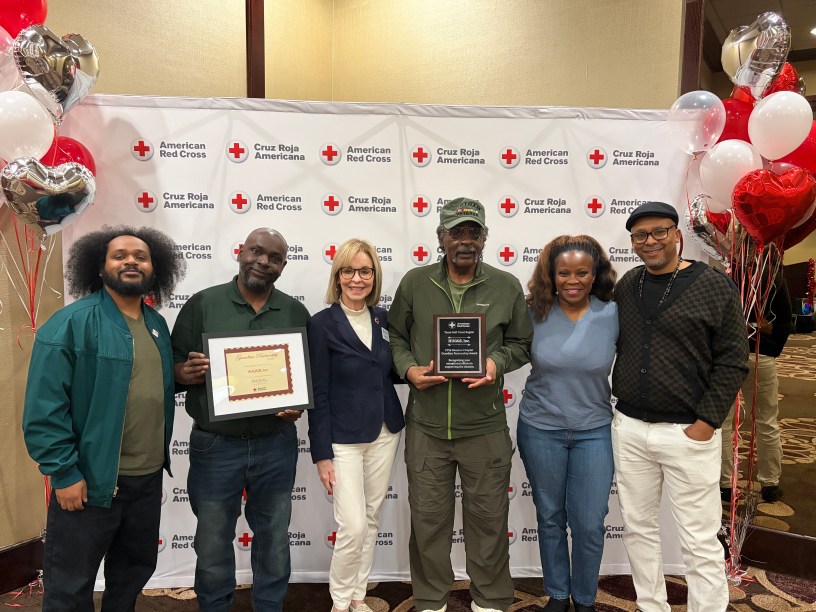
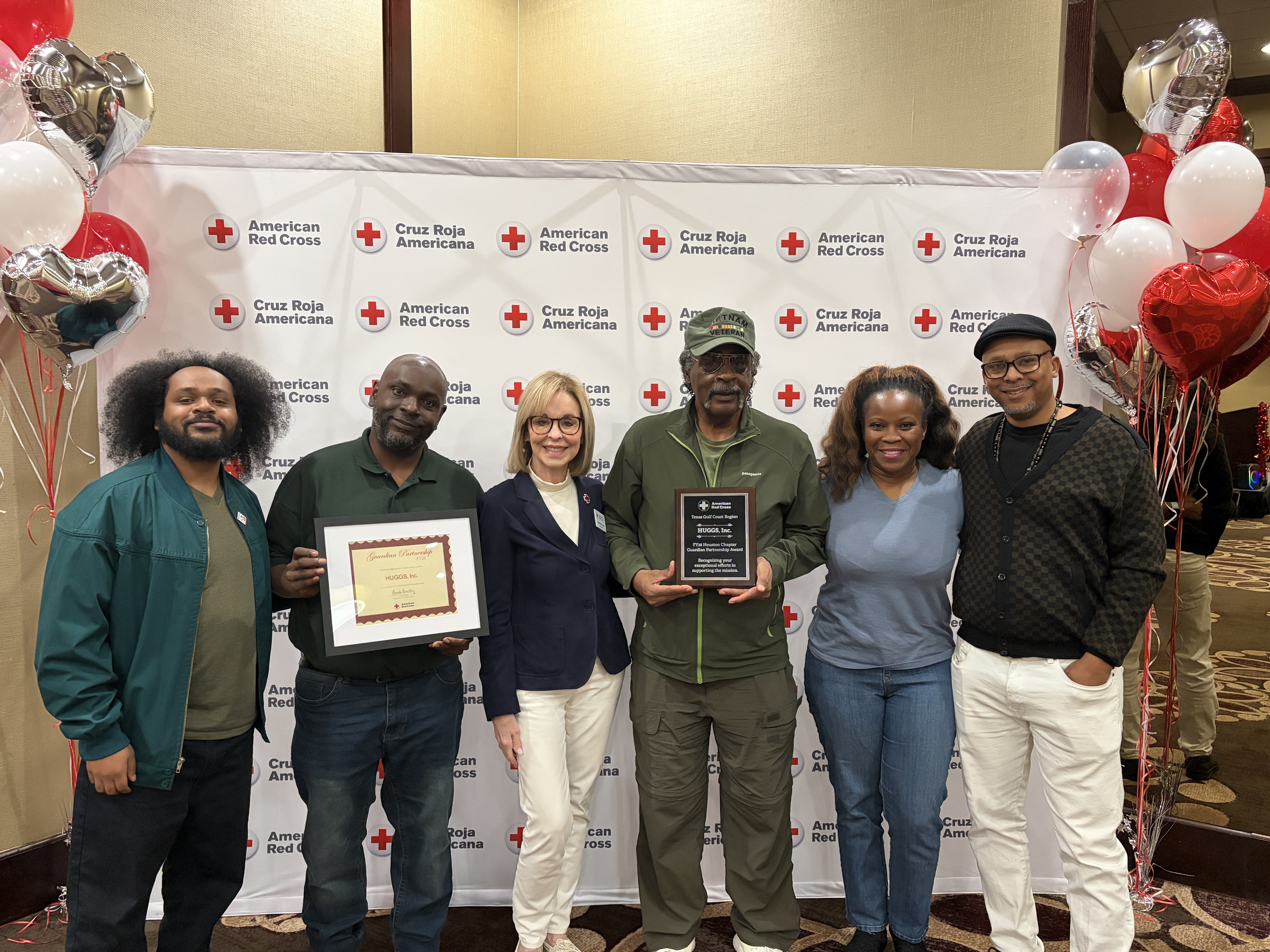
How the American Red Cross and HUGGS Are Restoring Dignity for Families
When disaster strikes, the immediate focus is survival, ensuring families have shelter, food, and safety. But what happens after the emergency response ends?
For many families across the Texas Gulf Coast, the hardest part begins when the crisis has passed, when they must rebuild not only their homes, but their sense of stability and normalcy.
That is where a powerful partnership between the American Red Cross and HUGGS, Inc. is making a lasting difference.
The American Red Cross has long stood on the front lines of disaster response, providing immediate relief to communities in crisis. Across the Texas Gulf Coast Region, the organization serves more than 9 million people and responds to disasters of all sizes often addressing an average of six home fires every day. Yet recovery is not a moment, it is a process.
Recognizing that families often face new challenges after the initial response, the Red Cross has strengthened its impact through partnerships with community-based organizations like HUGGS, Inc., a Missouri City based nonprofit focused on household stabilization and dignity-centered recovery.
Founded in 2018, HUGGS was created to address a critical gap in disaster recovery. As Executive Director Phelon Taylor explains, many families can survive the crisis itself but struggle in the aftermath. “We saw a gap between immediate relief and real household stabilization.”
For Ebony Fowler, that gap was not just observable, it was actionable. “In my role, I am constantly thinking about community needs beyond the initial response phase,” Fowler explained. “Families were stabilizing after immediate Red Cross assistance, but many were returning to empty homes without the essentials needed to truly restart.”
Identifying HUGGS as a mission-aligned partner already addressing this need, Fowler helped facilitate the connection, bringing both organizations together through intentional conversations and a shared vision for impact. “My focus was on building a partnership that was not transactional, but sustainable, scalable, and rooted in impact,” she said.
What emerged was more than a collaboration, it became a continuum of care. While the Red Cross provides immediate disaster relief; shelter, food, and financial assistance, HUGGS extends that support into the next phase of recovery, helping families rebuild functional, livable homes.
After a disaster, many families face a reality that is often overlooked: they may have secured housing but lack the essential items needed to make it a home. Through its Furniture Assistance Voucher Program and stabilization services, HUGGS provides families with beds, tables, and household furnishings, transforming empty spaces into environments where life can begin again.
As Taylor describes it, “It can mean making sure a family is not walking into an empty home, helping provide beds so children are not sleeping on floors, and furniture that allows a home to feel livable again.” This is where dignity is restored, not just through shelter, but through stability.
The collaboration between the Red Cross and HUGGS is both intentional and highly coordinated. It begins with Red Cross case workers identifying families who have experienced significant loss and are transitioning back into housing. From there, eligible households are referred to HUGGS for continued support.
But as Fowler emphasizes, “This is not a handoff, but a coordinated effort, we stay engaged to ensure services are delivered, timelines are met, and ultimately that the family has what they need to move forward.” This structured approach ensures a seamless transition from crisis response to long-term recovery, one that is efficient, intentional, and centered on dignity.
The true impact of this partnership is seen not just in systems, but in lives. In one response to a multi-family fire during the holiday season, several households were displaced with little to return to. While emergency assistance addressed immediate needs, the next phase of recovery required more.
Through HUGGS, families received essential furnishings; beds, dining tables, and living room items, allowing them to begin again in a meaningful way.
But the transformation extended beyond the physical. “What struck me most was not just the physical transformation, but the emotional shift,” Fowler shared. “The family went from uncertainty and stress to a sense of stability and hope.”
That shift from survival to hope is where recovery truly begins. This partnership reflects a broader truth about disaster response: no single organization can meet every need. The strength of the Red Cross lies not only in its ability to respond, but in its ability to convene, collaborate, and build resilient networks. As Fowler explains, HUGGS plays a critical role in extending that impact.
“They are truly the bridge,” she said. “Together, we move from stability to restoration, ensuring that families are not just surviving, but able to rebuild with dignity and a sense of normalcy.”
“We meet families on some of their hardest days,” Fowler said. “Being part of a partnership like this means we are not stopping at ‘just enough.’ We are ensuring families feel seen, supported, and valued as they rebuild.”
That commitment aligns with the mission of the American Red Cross to prevent and alleviate human suffering in the face of emergencies. Through its partnership with HUGGS, that mission extends beyond immediate relief into long-term recovery, ensuring that families are not only helped in moments of crisis, but supported as they rebuild their lives and move forward with dignity, stability, and hope.

 Texas Gulf Coast American Red Cross