
The American Red Cross is launching a massive response across multiple states stretching from Texas to New England as the powerful winter storm starts its march across the country. Millions of people are in the path of this dangerous wintry mess, and the Red Cross offers these steps you can take to help you stay safe:
People need to stay informed about the storm and get ready for possible prolonged power outages. You may have to leave your home if the power is out and you have no heat. Think about where you’ll go, how you’ll get there, where you’ll stay and what you’ll take with you.
- Don’t forget your pets ─ visit here for information on keeping them safe in cold weather.
- Plan to reconnect with loved ones if you are separated. Write down important phone numbers on a contact card and carry it with you.
- Plan to stay informed by monitoring local weather and news reports even if the power goes out. Have a backup battery or another way to charge your cell phone, and a battery-powered or hand-crank radio.
GATHER SUPPLIES like food, water and medicine and organize them into a go-kit and a stay-at-home kit.
- Your go-kit should include three days of supplies that you can carry with you. Include backup batteries and chargers for your devices (cell phone, CPAP, wheelchair, etc.)
- Your stay-at-home kit should have two weeks of food and water, and a one-month supply of medications and medical supplies if possible.
- Customize your kit to meet your household’s needs. If you have pets, include leashes, carriers, food, bowls, litter, litterbox and photos of you with your pet in case you’re separated. If you have young children, include diapers, wipes and formula.
- Have a snow shovel and ice-melting products on hand to keep your walkways safe.
- Ensure you have enough warm clothing for everyone in your household.
- Consider having emergency supplies in your vehicle, such as a blanket, warm clothing, a first aid kit, and boots.
HOW TO STAY SAFE
WINTER SAFETY:Stay warm indoors. If your home becomes too cold, go to a public library, shopping mall or warming center.
- Use care with space heaters and fireplaces to prevent fires. Keep anything that could catch fire at least 3 feet from the heat. Turn portable heaters off when you leave the room or go to sleep. Find more information on how to heat your home safely here.
- If you must go outside, wear layers of loose clothing, a coat, hat, mittens and water-resistant boots. Use a scarf to cover your face and mouth.
- Be careful walking on snow or ice and avoid overexertion when shoveling snow. If possible, work with a partner and take frequent breaks.
POWER OUTAGE: Leave one light on, so you’ll know when power is restored.
- Useflashlights or battery-operated lanterns — not candles — to help avoid fire.
- Don’t drive unless necessary. roads could be congested.
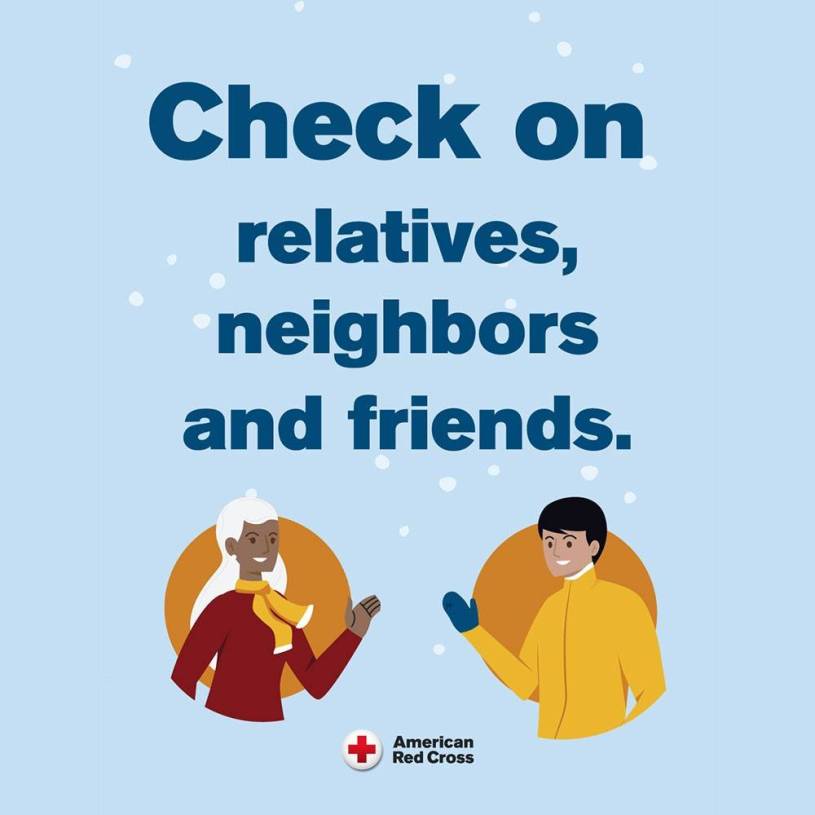
- Check with loved ones and neighbors to see if they need help.
- Keep food cold. When in doubt, throw it out. Keep refrigerator and freezer doors closed as much as possible to help keep food cold. Use coolers with ice if necessary. Throw out perishable food that has been warmer than 40 degrees Fahrenheit.
GENERATOR DO’S AND DON’TS Never use a generator inside. This also goes for grills, camp stoves or other gasoline, propane, natural gas or charcoal burning devices.
- Keep this equipment outside and away from doors, windows and vents. Carbon monoxide kills. If you start to feel sick, dizzy or weak, get to fresh air right away. Keep the generator dry and plug appliances directly into the generator. Never plug a generator into a wall outlet.
FROSTBITE AND HYPOTHERMIA Areas first affected by the cold include your nose, ears, cheeks, chin, fingers and toes.
- Signs of frostbite include pain, numbness or a change in skin color.
- Signs ofhypothermia, which can be deadly, often include shivering, confusion, drowsiness and slurred speech.
- Act fast and get out of the cold immediately if you see signs of hypothermia or frostbite. Get emergency medical care right away.
FROZEN PIPESPipes that freeze most frequently are outdoor lines, pipes in unheated interior areas like basements and crawl spaces, attics, garages, or kitchen cabinets, and pipes that run against exterior walls that have little or no insulation.
- Open kitchen and bathroom cabinet doors to allow warmer air to circulate around the plumbing.
- Let the cold water drip from the faucet served by exposed pipes.
- Remove, drain, and store hoses. Close inside valves supplying outdoor hose bibs.
- Keep garage doors closed if there are water supply lines in the garage.
Download the free Red Cross First Aid app so you’ll know what to do if emergency help is delayed and the free Emergency app for weather alerts, open Red Cross shelter locations and safety steps for different emergencies. Choose whether you want to view the content in English or Spanish with an easy-to-find language selector. Find these and all of the Red Cross apps in smartphone app stores by searching for the American Red Cross or going to redcross.org/apps.
About the American Red Cross:
The American Red Cross shelters, feeds and provides comfort to victims of disasters; supplies about 40% of the nation’s blood; teaches skills that save lives; distributes international humanitarian aid; and supports veterans, military members and their families. The Red Cross is a nonprofit organization that depends on volunteers and the generosity of the American public to deliver its mission. For more information, please visit redcross.org or CruzRojaAmericana.org, or follow us on social media.

 Texas Gulf Coast American Red Cross