
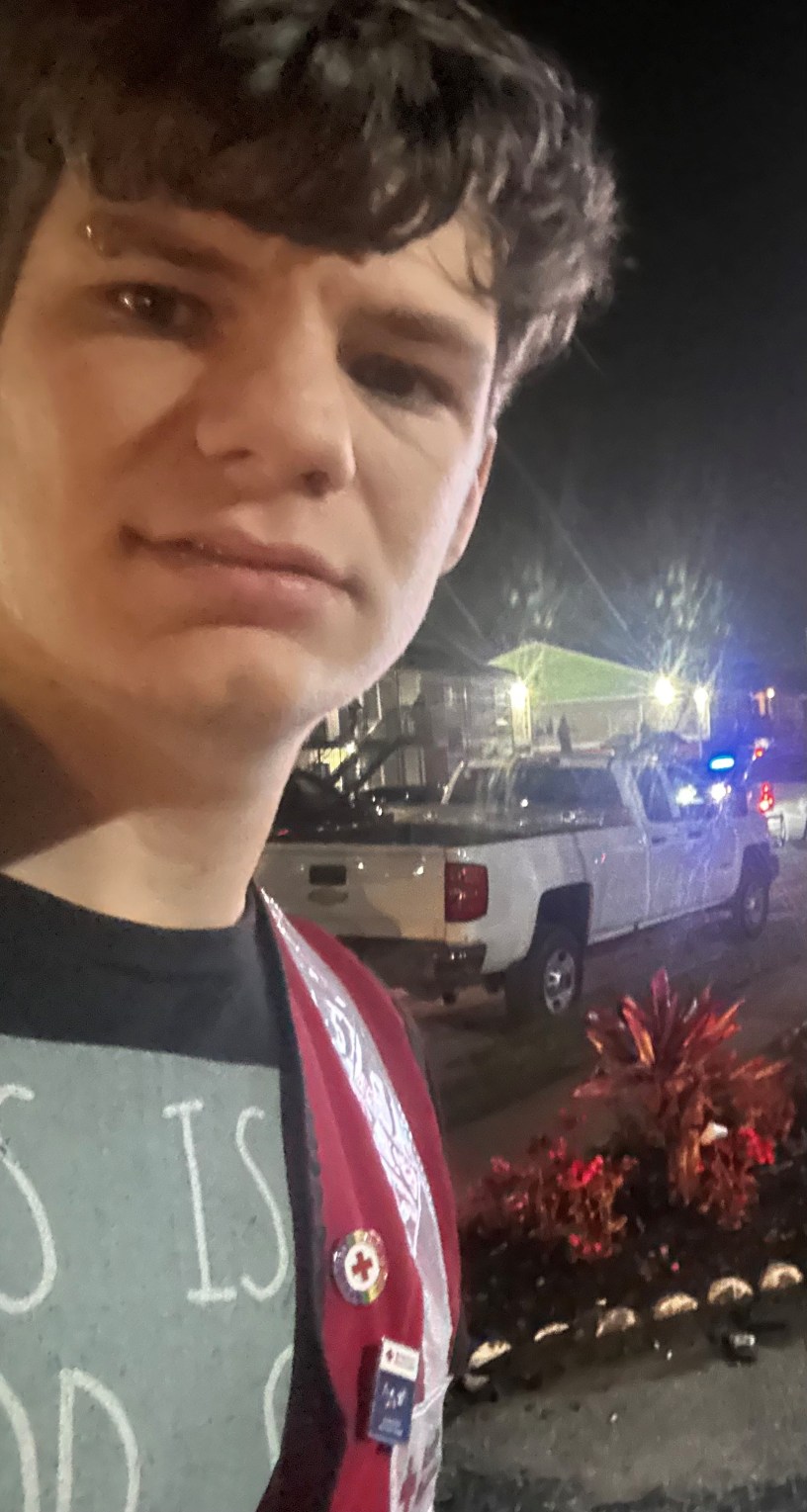
Travis Barbier didn’t originally picture himself volunteering for the Red Cross. During the 2024 elections, he just wanted to help out. “It felt like something I could do instead of just scrolling and complaining,” he said. When that campaign ended, the quiet that followed felt empty. He searched online for new ways to help and found the Disaster Cycle Services (DCS) page. A local team member reached out and things took off from there.
Starting Out
He remembers his first DCS assignment. “Everyone does,” he said. “You think you’re ready, then the call comes in and it’s real.” The client only spoke Spanish, so Travis was able to make an immediate impact by translating between volunteers and the client, ensuring the client received the assistance they needed. He showed up nervous but steady, doing intake, talking with the family, and helping the team communicate clearly.
That experience showed him that what the Red Cross does isn’t small; it truly affects how quickly families recover after a disaster.
Learning What Matters
Since then, Travis has learned that being calm is more useful than being heroic. “Sometimes folks have barely any damage but a huge story,” he said. “You listen, you check, and you stick to the process. That’s what keeps the help fair.”
He’s seen what happens when standards slip. In a previous volunteer role at another organization, aid was handed out too easily, and the budget vanished fast. The Red Cross approach made sense to him: compassion balanced by clear standards.
He enjoys the mix of people he works with, retirees, students, parents, professionals, and others; all focused on helping clients. “We’re all different ages and backgrounds, and all are equal,” he said.
The Call in Katy
One night, he and another volunteer, Catrina, were sent to Katy. A mother and her autistic daughter had lost their apartment. The mother, who also has ADHD, was in shock. “She kept apologizing for not making sense,” he said. “We just slowed down and talked.”
By the time they left, the woman was calmer. “She said she finally felt heard,” Travis said. “I almost cried when I saw how relieved she was.”
His experiences prompted him to begin EMT training. After learning how emergency systems work, he faced a small setback: “I didn’t pass the national test on the first go,” he said with a laugh, “but I’m going back for it. I’m close.”
Keeping Perspective
Travis takes duty-officer shifts and helps recruit new volunteers. He likes seeing people grow into their roles. But he warns newcomers not to let it take over their lives.
“Don’t feel guilty if you can’t answer every call,” he said. “We all have jobs and families. You help when you can, that’s enough.”
For now, he has time to focus on the Red Cross, his personal growth, and whatever comes next.
Story By: Bryan Hanks

 Texas Gulf Coast American Red Cross