

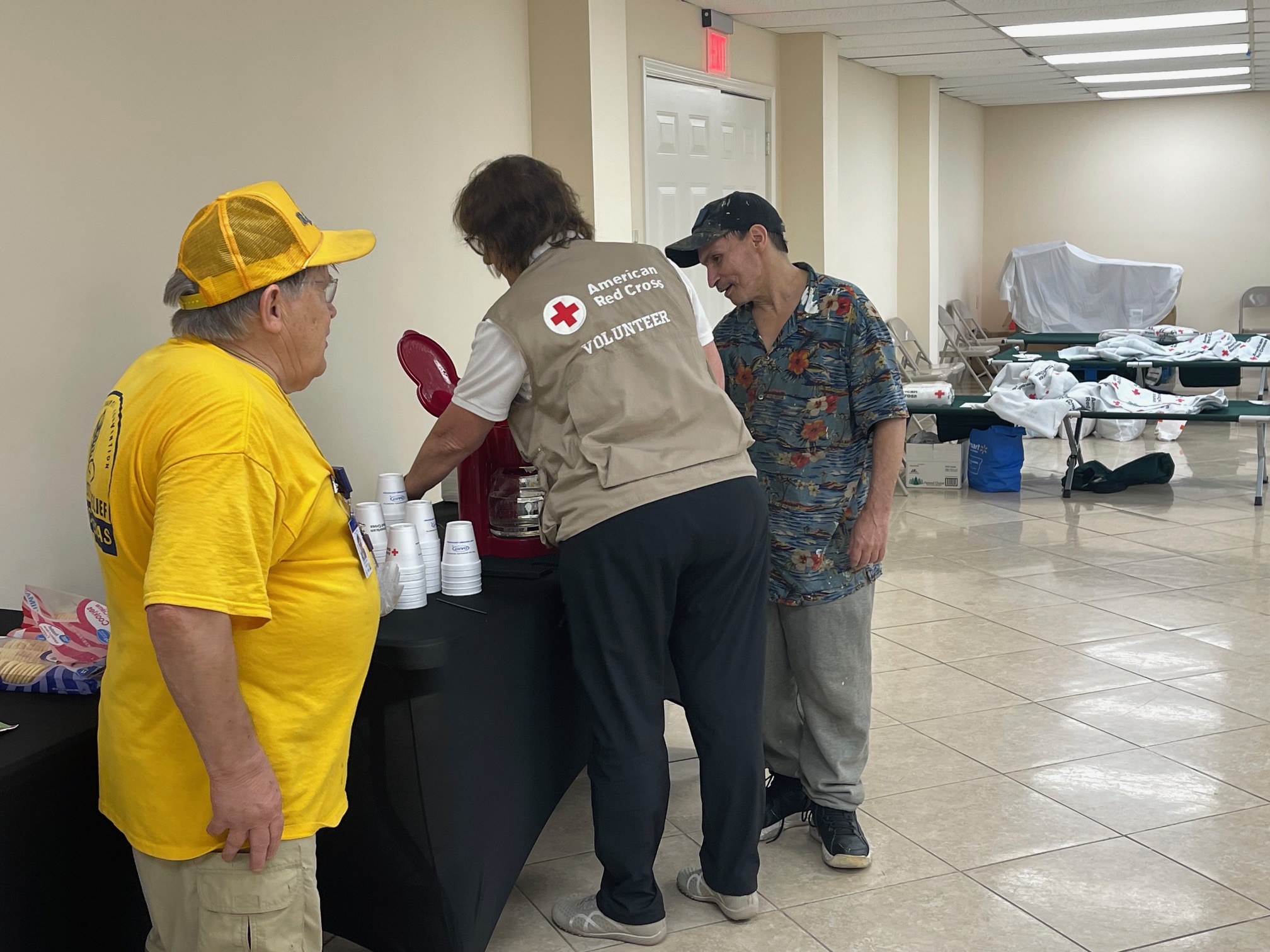
On a late Wednesday evening, Manuel Hernandez, Jr., was in his small apartment at a senior living facility located at an apartment complex on Burress Street
“I heard shouts outside,” Hernandez said. “People banging my door and yelling ‘the building is on fire! The fire is coming!’ So I opened the door and ran as best I could. I could see flames on the other side of my building. I went outside to see what was happening. A TV crew put me on the spot and asked, ‘What are you going to do now?’ I started crying thinking of the things I left in my apartment. I was not ready for that question.”
Living alone was a challenge, let alone escaping from a fire. Hernandez had a significant cognitive impairment. More than 20 years earlier, he had been riding in a pickup truck that flipped over five times. It had no windshield, and he was ejected. He landed headfirst. The doctors told his family he would live in a vegetable state for the rest of his life. Instead, on that Wednesday he was able to walk, albeit slowly. He spoke with a raspy, hoarse voice that was clear if you listened closely.
In another unit, Godofredo Del Angel was resting. He too lived alone, a retired math, electrical and AC instructor. “I heard loud banging on my door,” he said. “I started to open the door when a firefighter smashed it with an ax. I went outside. The fire was on the other side. Several apartments had caught fire.”
Another resident, Juan Gonzalez, had just moved in barely two weeks before. He heard hard knocking on the door. “The building is on fire!” he heard. Juan went outside to find more than a dozen fire trucks already there fighting the blaze.
His tone was somber. “I saw the firefighters helping a woman with limited mobility down the stairs.”
Gonzalez’s story wasn’t unique that night. Like many multifamily fires, it started without warning and spread quickly. People fled only with the clothes they were wearing. Many didn’t even have time to take essentials like medications. In the Gulf Coast area, 80% of the disasters that involve the Red Cross are caused by fires.
“Management at the apartment opened up the community room to give us shelter,” Gonzalez said. “They told us we were to go to an emergency shelter opened up by the American Red Cross with its partners at St. Mathew’s Cathedral.”
“Without that shelter, I would have had to stay there,” he said. “I didn’t even have time to get my medicines for blood pressure and blood sugar out. Up until that time I had only heard about the Red Cross on TV. And there I was, in a Red Cross shelter. It was fantastic.”
The Red Cross works with many community partners to respond to emergencies such as multifamily fires. Manuel, Juan and the others found a warm meal and a place to sleep — they also got help replacing lost prescriptions, emotional support, and health services.
All of this doesn’t just happen. It takes the coordination and volunteering from those in the communities. Volunteers make up 90% of the staff for the Red Cross. Nine out of 10 Red Cross members are volunteers.
Opening a shelter takes Red Cross volunteers, like Clarruth Seaton. She was there on the ground supervising operations at the St. Matthew’s shelter.
“Back in 2011 my husband and I signed on with the Red Cross. I had heard about the Red Cross after the Haiti earthquakes and wanted to help,” Seaton said. “We both worked in the safety area for oil companies and thought that the Red Cross would be a natural ‘next job’ after retirement. Deploying to help at a disaster is like an adrenaline shot. Once you taste it, you want more.”
Seaton has deployed to numerous disaster areas. “In 2014 I got my first shelter call in Richmond,” she said. When asked about why she serves, she answered, “I look for the humanity in people. There’s so much need out there. I have seen fires in the most underserved communities. What little I can give goes a long way. Where else would those people go?”
A few years ago, she lost her brother. “Maybe because I can’t take care of him, I can take care of others,” she said. “In an emergency, people need help right then, on the ground. That’s where I make a difference.”
If an emergency has forced you to evacuate your home, or disrupted your access to essential services, the Red Cross is there for you. Volunteers are trained to meet people where they are, in moments of overwhelming loss.
To support those affected by disasters you can donate at redcross.org/Texas. You can also join Clarruth and many others by volunteering in your local community. Go to redcross.org/Texas to learn more and sign up today.
Story By F.A. Philibert

 Texas Gulf Coast American Red Cross