


In the days following disastrous flooding throughout the Texas Gulf Coast region, keen observers may have noticed dozens of volunteers wearing red vests scattered across eastern Texas looking at homes in various states of disarray. These Red Cross volunteers have been conducting disaster damage assessments, a critical step to both inform where immediate assistance may be needed as well as initiating the process of delivering vital financial assistance to people whose homes have been damaged or destroyed by floodwaters.
“When the field teams go out and do the surveys, all of this information is being fed into a dashboard that we have constantly refreshing here at HQ,” said Madison Lawrence, a Disaster Program Manager from the Texas Gulf Coast region who is currently serving is the Deputy Assistant Director of Information & Planning for the Red Cross relief operation focused on the flooding in eastern Texas. “We can see clusters of those [data points], so if we need to target missions to go and deliver some of those critical items, we can provide them and help people with their recovery.”
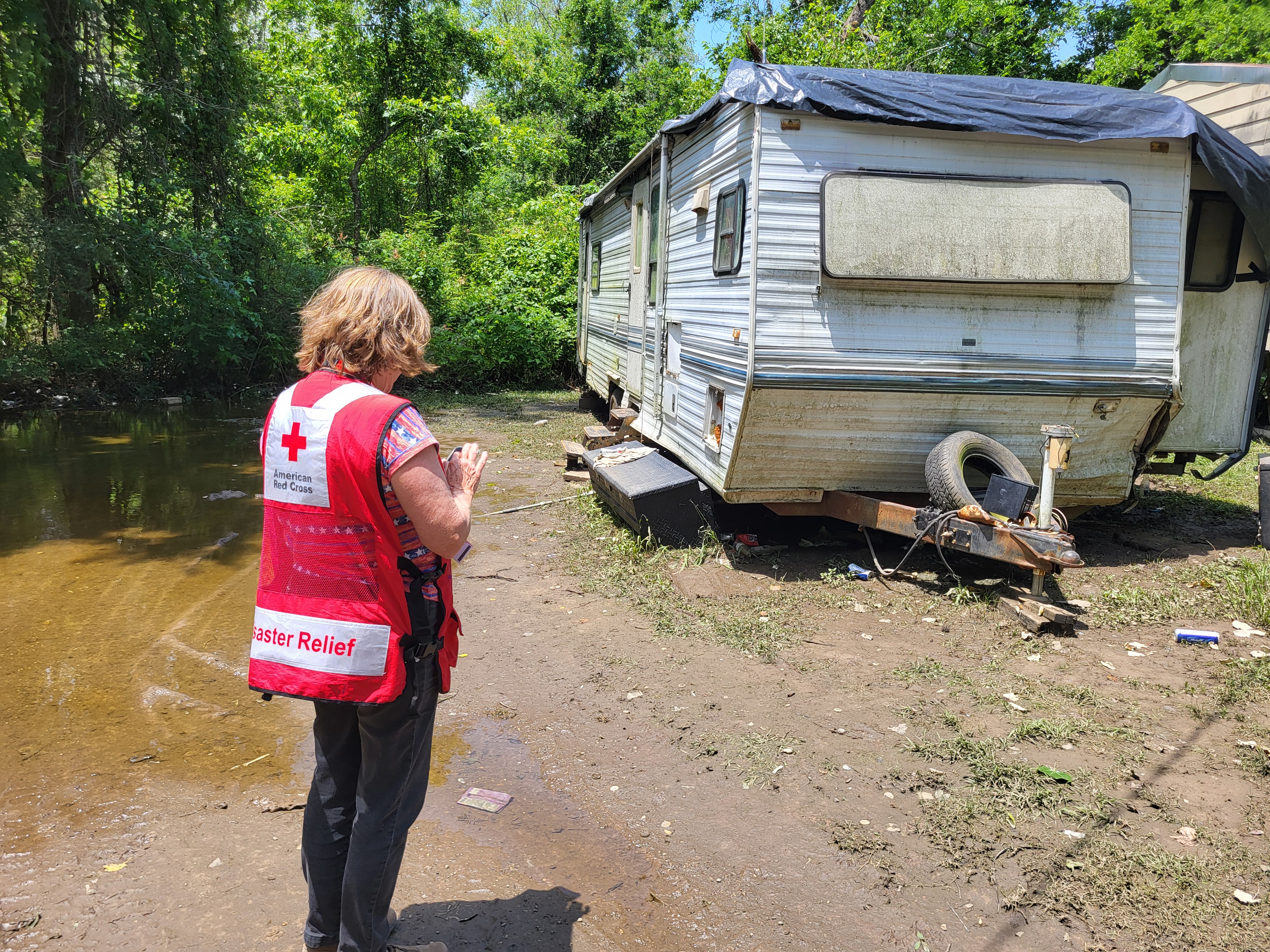
Although this may sound like a complex process, for volunteers such as Roxane Bonner and Dan Koontz, it is very straightforward. First, they are assigned a territory to cover. Then they go out into the field, visually look for signs of flood damage, and input that information into a mobile app on their smartphones. Afterwards, they return home and rest up to do it again the next day.
“I feel like I learned it really fast, and I think it’s great,” said Roxane. “I love how quick it is – the fact that we put in our assessment, click the button, and headquarters already has the data. That’s amazing to me.”
The data collected by teams like Dan and Roxane is supplemented by other sources – including addresses of displaced residents staying in Red Cross shelters, reports self-submitted to 1-800-RED CROSS by people asking for help, and information shared by government and community partners.
“We’re overlaying multiple layers of data,” said Timothy Dahlum, a volunteer from the Los Angele region who is currently serving as the Assistant Director of Information and Planning for the Red Cross during the eastern Texas flood response. “We can use all of that information to prioritize which counties need to come first instead of making all of the counties in the entire impacted area wait longer while we have to cover every single inch.”
For people impacted by floodwaters, the earlier they can get help from the Red Cross – the more quickly they can begin on their road to recovery.
Story By: Frederic Klein

 Texas Gulf Coast American Red Cross