
About Flu
Influenza, also known as the flu, is a contagious respiratory disease caused by different strains of viruses. Flu viruses spread from person to person when people who are infected cough or sneeze. Adults may be able to infect others 1 day before getting symptoms and as long as 5 days after getting sick.
Know the Difference: Types of Flu Outbreaks
Seasonal Flu — A contagious respiratory illness caused by influenza (flu) viruses occurring every year. It affects an average of 5 percent to 20 percent of the U.S. population by causing mild to severe illness, and in some instances can lead to death.
Epidemic — The rapid spread of a disease that affects some or many people in a community or region at the same time.
Pandemic — An outbreak of a disease that affects large numbers of people throughout the world and spreads rapidly.
H1N1 Influenza (swine flu) — H1N1 influenza is a respiratory disease of pigs caused by type A influenza viruses that cause regular outbreaks in pigs. People do not normally get H1N1 influenza, but human infections can and do happen. H1N1 influenza viruses have been reported to spread from person-to-person.
Avian Influenza — Commonly known as bird flu, this strain of influenza virus is naturally occurring in birds. Wild birds can carry the virus and may not get sick from it; however, domestic birds may become infected by the virus and often die from it.
Are you considered high risk for flu-related complications?
You are at an increased risk if you are:
- Age 50 or older
- Pregnant
- Living with a chronic medical condition
- A child, age 6 months and older
- Living with or caring for anyone at high risk
If you are at high risk, have your vaccinations updated every year, as directed by your physician.
How to Prevent the Flu
Flu Prevention is the Best Preparation
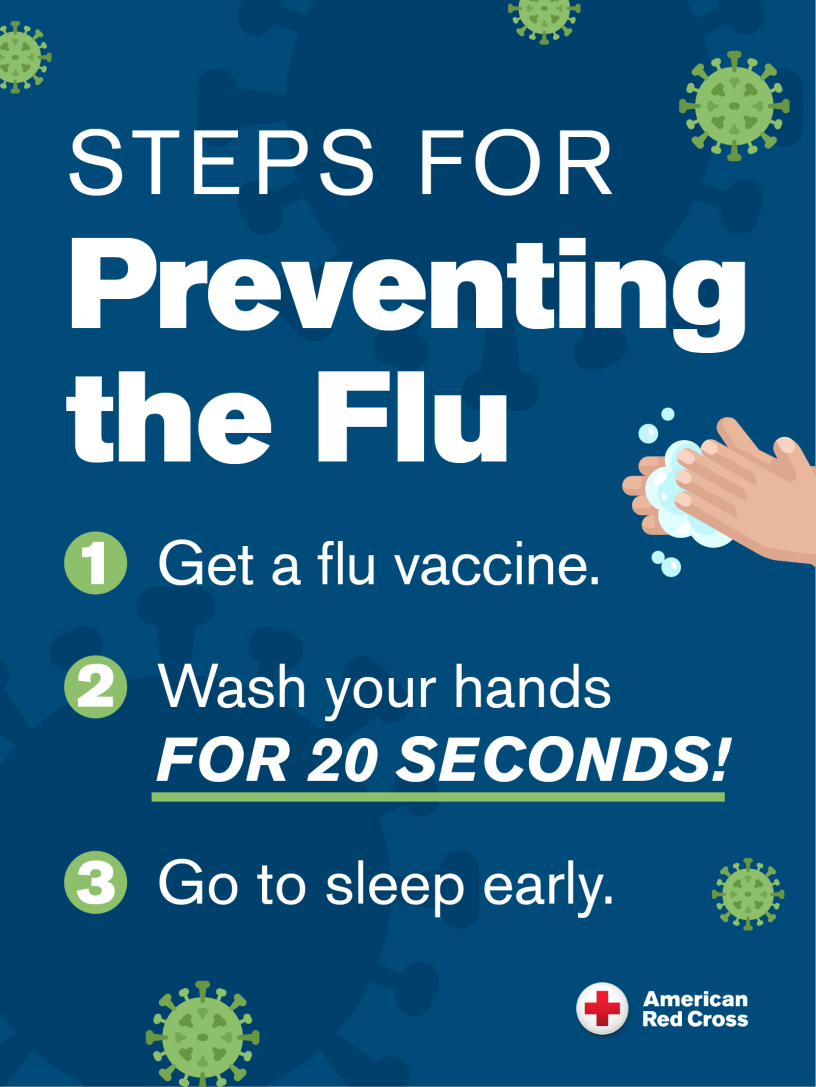
A flu vaccine is available in the U.S. every year. Get your flu shot as soon as it is available for the best chance of protection.
Always Practice Good Health Habits to Maintain Your Body’s Resistance to Infection
- Eat a balanced diet.
- Drink plenty of fluids.
- Exercise daily.
- Manage stress.
- Get enough rest and sleep
Take These Common Sense Steps to Stop the Spread of Germs
- Wash hands frequently with soap and water or an alcohol-based hand sanitizer.
- Avoid or minimize contact with sick people (a minimum three feet distancing is recommended).
- Avoid touching your eyes, nose and mouth.
- Cover your mouth and nose with tissues when you cough and sneeze. If you don’t have a tissue, cough or sneeze into the crook of your elbow.
- Stay away from others as much as possible when you are sick.
- Adopt business/school practices that encourage employees/students to stay home when they have flu symptoms.
Hand Washing: A Simple Solution That Really Works
Teach kids how to wash their hands
Proper and consistent hand washing is one of the easiest ways to prevent the spread of flu. Teach kids by example by showing them proper hand washing technique:
- Wet hands with water and apply an amount of soap recommended by the manufacturer to hands.
- Rub hands together vigorously for at least 20 seconds, covering all surfaces of the hands and giving added attention to fingernails and surfaces where jewelry is worn.
- Rinse hands with water.
- Dry thoroughly with a disposable towel.
- Use towel to turn off faucet.
For younger children who tend to rush their hand washing, have them sing a short song such as “Row Row Row Your Boat,” or the “Happy Birthday” song – this will ensure they wash for at least 20 seconds. Placing hand-washing reminders at children’s eye level will also help them become consistent hand washers.
How to Treat the Flu
Diagnosing and Treating the Flu
It may be difficult to tell if you are suffering from the flu or another illness. If you develop flu-like symptoms and are concerned about possible complications, consult your health care provider.
Common Flu Symptoms
- High fever
- Severe body aches
- Headache
- Extreme tiredness
- Sore throat
- Cough
- Runny or stuffy nose
- Vomiting and/or diarrhea (more common in children than in adults)
NOTE: Having all of these symptoms doesn’t always mean that you have the flu. Many different illnesses have similar symptoms.
Potential Risks and Serious Complications of the Flu
- Bacterial pneumonia
- Dehydration
- Worsening of chronic medical conditions
- Ear infections
- Sinus problems
Caregiving – How to Treat the Flu
- Designate one person as the caregiver.
- Keep everyone’s personal items separate. All household members should avoid sharing pens, papers, clothes, towels, sheets, blankets, food or eating utensils unless they have been cleaned between uses.
- Disinfect doorknobs, switches, handles, computers, telephones, toys and other surfaces that are commonly touched around the home or workplace.
- Wash everyone’s dishes in the dishwasher or by hand using very hot water and soap.
- Wash everyone’s clothes in a standard washing machine as you normally would. Use detergent and very hot water and wash your hands after handling dirty laundry.
- Wear disposable gloves when in contact with or cleaning up body fluids.
Download the Flu Safety Checklist
Checklist Available in Multiple Languages
- Flu Checklist – English
- Flu Checklist – Chinese
- Flu Checklist – French
- Flu Checklist – Haitian
- Flu Checklist – Korean
- Flu Checklist – Spanish
- Flu Checklist – Tagalog
- Flu Checklist – Vietnamese
- Taking Care of People with the Flu – English
- Taking Care of People with the Flu – Spanish
- The 6 Steps of Handwashing

 Texas Gulf Coast American Red Cross