
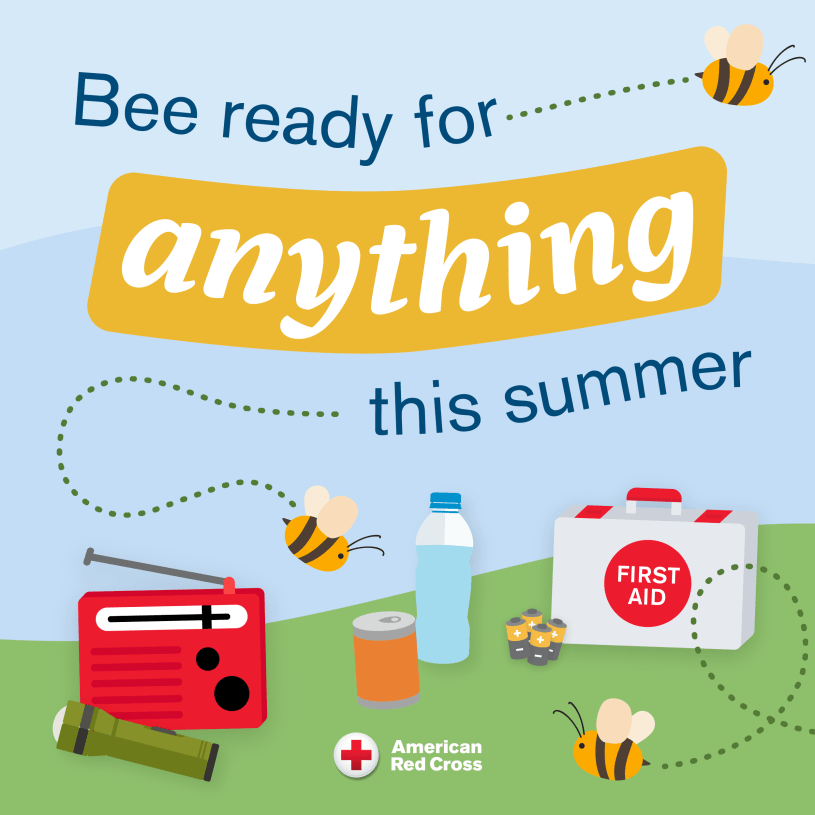
Fifteen hours of daylight fuel the soft metallic hum of bicycles as their freewheel ticking merges with children’s voices. Everywhere dotting the landscape once again can be found examples of this perennial audible blend. At last, sun showers, lightning bugs, dirt, and sand replace the walls and windows of scheduled life. Summer has arrived. With it, some reminders from The American Red Cross to help keep the laughter and good times flowing.
When around water, whether it is a pool or the ocean, careful monitoring can prevent drowning. It only takes a moment for a weak swimmer to slip below the surface, and in the U.S., an estimated two children drown every day. The Red Cross has several resources you can take advantage of before you pack your sunscreen, such as the Swim app and a map to locate your community’s Learn-to-Swim establishments. Also, to meet your next adventure with the utmost preparedness, visit the Red Cross website and sign up for first aid and CPR classes.
While at the beach or pool, try to choose areas with a lifeguard on duty. As an added layer of precaution, designate a “water watcher” to monitor everyone in and around the water. The more eyes, the better because drowning can occur quickly and quietly. Also, U.S. Coast Guard-approved life jacket can go a long way to protect inexperienced swimmers. When on a boat, all individuals should wear a life jacket regardless of ability. In the event you notice someone drowning, reach or throw, never go. A panicked person could pull you under along with them.
For beachgoers, be cautious of aquatic life and underwater obstructions that can cause injury. Never dive in headfirst. One hazard to be mindful of is becoming caught in a rip current. In the event you find yourself in this situation, never fight it. Instead, swim parallel to the coast until free of its pull, then proceed to shore.
When staying on land, whether camping, going on a picnic, or grilling at home, consider having a first aid kit on hand that can handle common problems such as insect stings, sprains, and other injuries. Preparing before the trip by taking the Red Cross First Aid and CPR courses could save a life when you are far from help. Also, the First Aid app can guide the treatment of more severe wounds such as broken bones and bites.
Hiking and camping are fun ways to enjoy the outdoors but remember to wear layers and bring plenty of water. Falls, bug bites, and dehydration are the biggest concerns when participating in these activities. Bug spray can keep disease-carrying mosquitoes and ticks at bay and choosing an option that includes DEET offers the most effective protection. If hiking or walking through tall grass or underbrush, be aware of another pest—ticks. Light-colored long-sleeved shirts and pants can make it easier to spot insects and tucking in shirts and pant legs can prevent them from getting on the skin. On the Red Cross website, you can find tips for avoiding prevent mosquito and tick bites this summer.
When enjoying the outdoors away from home, the last concern is proper food storage and preparation. If you bring uncooked meats, a food thermometer ensures food is cooked thoroughly. Separating raw food from the ready-to-eat variety helps avoid contamination. Also, never leave perishable food in the sun. These tips will aid you and your loved ones in having the safest, most enjoyable summer adventure possible. If something happens, be sure you have shared plans and locations with friends or family so they know when they should expect you back.
If you are cooking closer to home, keep in mind that outdoor grilling mishaps cause 10,000 home fires a year. To prevent this, one best practice is never to leave a grill unattended and keep it away from the house or anything else that can catch fire. Never grill indoors or in a garage, and once you lite the grill, be aware that it is unsafe to add more starter fluid. Finally, to prevent burns while grilling, use long-handled tools.
If your summer escapades involve a furry friend, here are some tips to keep them safe as well. Check your pets for ticks, whether it’s an afternoon hike or an overnight trip. Before you go, you can purchase breed-specific bug repellant to help prevent bites. Another hazard to be aware of is heat stroke. Pets can suffer heat stroke just like us. If you see signs of this, immediately cool them down with a hose or other water source. After they are out of immediate danger, bringing them to see their veterinarian as soon as possible may be necessary to treat unseen damage. Be aware that heat stroke can happen in a hot parked car, even with cracked windows. For more support, download the Red Cross Pet First Aid app for instant access to advice for treating heat stroke, other emergencies, and general care for cats and dogs. Or you can use the app to take the Cat and Dog First Aid Online Training course.
The Red Cross hopes these tips bring you a wealth of joy and a season to remember.
Story By: Kristen Lawler

 Texas Gulf Coast American Red Cross